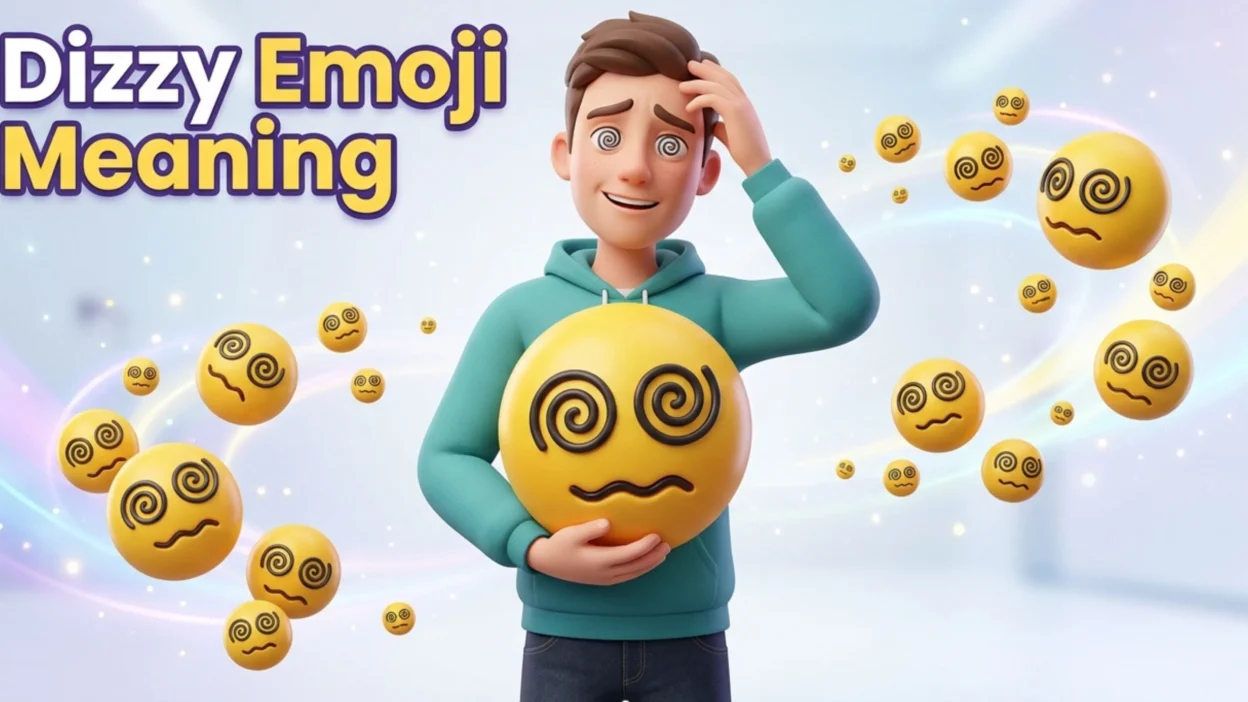
The 😵💫 Dizzy Face emoji can turn an ordinary message into something much more expressive. It is commonly used when someone feels confused, overwhelmed, shocked, exhausted, or mentally unable to process what is happening.
Depending on the situation, it can also represent being stunned by something surprising, feeling emotionally overwhelmed, or joking about a situation that has become completely chaotic.
In texting and social media, the Dizzy emoji can have different meanings based on the conversation and the person using it.
What Is the Dizzy Emoji?
The dizzy emoji, officially named “Dizzy Face” in the Unicode emoji standard, is a yellow face with swirling eyes and small stars or spirals hovering around its head. It’s designed to visually represent the feeling of being dazed, confused, or lightheaded, similar to the classic cartoon expression used to show a character has been knocked silly or is overwhelmed.
It was approved under Unicode 6.0 in 2010 and has been a staple emoji ever since, appearing consistently across iOS, Android, and messaging platforms with only minor stylistic differences.
How the Dizzy Emoji Looks Across Platforms
While the core design stays consistent, small visual differences exist depending on the device or app you’re using:
| Platform | Visual Style |
| Apple (iOS) | Swirly spiral eyes, small stars circling the head |
| Google (Android) | Similar spiral eyes, slightly rounder face shape |
| Samsung | Bright yellow face with more pronounced stars |
| Classic spiral eyes with subtle star accents | |
| Microsoft | Flatter design style, same spiral-eye concept |
These differences are minor, but they can slightly affect how “intense” the emoji feels. A more exaggerated spiral might read as chaotic confusion, while a subtler design might feel more like mild tiredness.
The Core Meaning of the Dizzy Emoji
At its heart, the dizzy emoji communicates one primary idea: a loss of balance, mental or physical.
1. Physical Dizziness or Lightheadedness
The most literal use. People send this emoji when describing:
- Standing up too fast and feeling woozy
- Motion sickness during travel
- Feeling faint from heat, hunger, or exhaustion
- Recovering from an illness or dehydration
Example: “Skipped breakfast again and now I’m 😵💫”
2. Confusion or Being Overwhelmed
This is arguably the most popular modern use. It’s less about physical spinning and more about mental overload.
Example: “This tax form has 40 questions and I’m 😵💫”
Here, the emoji isn’t describing an illness. It’s describing information overload, frustration, or simply not knowing what’s going on.
3. Shock or Disbelief
Sometimes the dizzy emoji pops up after surprising news, plot twists, or unexpected events. It expresses a “my brain can’t process this” reaction.
Example: “She said WHAT to him?! 😵💫”
4. Exhaustion
Especially after a long day, a tough workout, or back-to-back meetings, people use this emoji to express being mentally or physically drained.
Example: “Six meetings back to back today. I’m 😵💫”
5. Playful or Comedic Reactions
Not every use is serious. Many people use the dizzy emoji humorously to react to chaotic memes, ridiculous stories, or absurd situations.
Example: “My cat knocked three plants off the shelf in one afternoon 😵💫”
Dizzy Emoji vs. Similar Emojis
Because several emojis express confusion or being overwhelmed, it’s easy to mix them up. Here’s a quick comparison to help you choose the right one.
| Emoji | Primary Meaning | Best Used For |
| 😵💫 Dizzy Face | Confusion, lightheadedness, overload | Feeling overwhelmed, spinning thoughts |
| 😵 Knocked Out Face | Shock, being “done” or defeated | Extreme surprise or exhaustion |
| 🤯 Exploding Head | Mind blown | Shocking news, sudden realizations |
| 😖 Confounded Face | Frustration, distress | Struggling with a problem |
| 🥴 Woozy Face | Tipsy, off-balance, silly confusion | Lighthearted disorientation, humor |
Dizzy Face vs. Woozy Face: What’s the Difference?
These two get confused often because both involve a wobbly expression. The key difference:
- Dizzy Face (😵💫) leans more toward mental overwhelm, spinning thoughts, or literal lightheadedness.
- Woozy Face (🥴) leans more toward humor, tipsiness, or feeling “out of it” in a silly, lighthearted way.
If you’re describing genuine confusion or exhaustion, dizzy face fits better. If you’re joking around or describing a goofy, off-kilter feeling, woozy face is usually the better pick.
How to Use the Dizzy Emoji Correctly
Using emojis well is about matching tone to context. Here are some practical tips:
- Match the emotional intensity. Use it for genuine confusion or exhaustion, not minor inconveniences.
- Pair it with the right words.
- Consider your audience. In professional messages, use it sparingly, if at all. It fits casual conversations better than formal ones.
- Avoid overuse. Sending it repeatedly in one conversation can dilute its meaning and come across as excessive.
- Use it as a reaction, not just a statement. It works well as a quick response to something surprising, chaotic, or overwhelming shared by someone else.
Common Situations Where People Use the Dizzy Emoji
- Reacting to confusing instructions or paperwork
- Describing a hectic workday
- Responding to unexpected plot twists in shows or movies
- Talking about feeling sick or lightheaded
- Reacting to chaotic or funny social media posts
- Describing sensory overload in loud or crowded places
- Expressing disbelief over surprising news
Frequently Asked Questions (FAQs)
1. What does the dizzy emoji mean in texting?
It usually means the sender feels confused, overwhelmed, lightheaded, or shocked by something. The exact meaning depends on the conversation’s context.
2. Is the dizzy emoji used for physical illness or emotional confusion?
Both. It can describe literal dizziness, like feeling faint, or a figurative “my head is spinning” reaction to confusing or overwhelming situations.
3. What’s the difference between the dizzy emoji and the woozy emoji?
The dizzy emoji leans toward confusion or exhaustion, while the woozy emoji leans toward humor or a tipsy, off-balance feeling.
4. Can I use the dizzy emoji in professional messages?
It’s best used sparingly in professional settings. It fits casual conversations more naturally than formal business communication.
5. Does the dizzy emoji mean someone is sick?
Not necessarily. While it can describe feeling physically unwell, it’s more commonly used to express mental overwhelm or shock.
6. Why do people use the dizzy emoji after surprising news?
Because it visually represents a “spinning head” reaction, making it a natural fit for expressing disbelief or shock.
7. Is the dizzy emoji the same across all phones and apps?
The core design stays consistent, but small style differences exist between platforms like Apple, Android, Samsung, and WhatsApp.
Conclusion
The dizzy emoji might look simple, but it carries a wide range of meanings, from literal lightheadedness to mental overload, surprise, exhaustion, or lighthearted humor. Understanding the context behind its use is key to interpreting it correctly and using it effectively in your own conversations.
Next time you see that swirly-eyed face pop up in your messages, you’ll know exactly what your friend, coworker, or follower is trying to say. And when you send it yourself, you’ll be doing it with confidence, knowing it perfectly captures that feeling of your world spinning, one text at a time.